
Mackin Grant Channel
Tight timelines and tight budgets can make it hard to justify the resources students need. The Grant Channel gives you grant-ready language and practical tools you can use to write faster and submit with confidence.

Find Funding
Browse the Funding Directory to explore grant opportunities, eligibility details, funding priorities, and deadlines.
Use the matrix to identify likely funding streams based on your goal. Confirm eligibility locally.
Explore Solutions by Goal
Choose your goal, explore solutions, and borrow the language
Early Literacy
Early reading success is built, or missed, long before students encounter complex texts. Early literacy solutions focus on strengthening the foundational skills that make later reading possible, including phonological awareness, phonics, vocabulary, fluency, and early comprehension. When young learners have regular access to instructional materials designed for how children actually learn to read, instruction becomes more precise and barriers related to language, decoding, and access are reduced, particularly for multilingual learners, students at risk for reading difficulties, and children with limited access to books outside of school.
These solutions support engagement by allowing students to practice new skills in meaningful reading contexts rather than isolated exercises. Teachers can use early literacy resources flexibly across classroom instruction, small-group support, independent practice, and take-home learning, adapting use to meet developmental needs and instructional priorities. Evidence consistently shows that systematic, text-based practice in the early grades supports accurate decoding, growing fluency, and stronger long-term reading outcomes. Early literacy solutions also offer durability: materials remain relevant across multiple years, support evolving instructional approaches, and serve successive groups of students without ongoing licensing or replacement costs. For schools working to close early literacy gaps and build strong reading foundations, early literacy solutions provide a practical, high-impact approach.
Summer Reading
Extended breaks from formal instruction often result in lost reading progress, particularly for students who have limited access to books and literacy support outside of school. Summer reading solutions address this gap by ensuring students have consistent access to engaging, developmentally appropriate texts during out-of-school months, supporting continuity of learning when instruction pauses. By placing books directly in students’ hands, summer reading initiatives help stabilize reading skills, reinforce prior learning, and create opportunities for continued growth beyond the school year.
Summer reading solutions promote engagement by prioritizing choice, relevance, and volume, all key drivers of motivation and reading stamina. Students are encouraged to read widely and frequently, building positive reading habits that carry into the following school year. These solutions are flexible in implementation, supporting independent reading, family literacy efforts, library partnerships, and community-based programming across grade levels. Research consistently demonstrates that sustained access to books over the summer mitigates reading loss and supports comprehension, vocabulary development, and long-term academic success. Summer reading resources also offer strong value, as materials can be reused year after year, adapted for different age groups, and distributed through multiple settings without ongoing licensing or subscription costs. For schools and communities seeking to reduce opportunity gaps and support literacy growth beyond the classroom, summer reading solutions provide a practical, equitable, and high-impact approach.
Digital Reading & Research Resources
Digital reading and research resources expand access to high-quality learning materials by providing students with flexible formats for reading, listening, researching, and engaging with content. eBooks, audiobooks, databases, and digital collections help schools meet students where they are by offering resources that support a range of reading levels, learning preferences, language needs, and instructional goals. These tools can increase engagement by giving students more ways to access texts and information, whether they are reading independently, listening to build comprehension, conducting research, or exploring topics connected to classroom learning.
Digital resources also strengthen instruction across subject areas by giving educators access to current, curriculum-aligned materials that can be used for whole-class lessons, small-group support, inquiry projects, independent reading, and intervention. Built-in accessibility features, including Open-Dyslexic font, large print, text-to-speech, and adjustable audio playback speed, make these materials usable for students with dyslexia and other reading differences, students with visual impairments, and multilingual learners. Audiobooks can support students who benefit from hearing fluent reading, while eBooks provide convenient access to titles across devices and learning environments. Databases offer students age-appropriate, reliable information for research and inquiry, helping them build background knowledge, vocabulary, comprehension, and critical thinking skills.
Investing in digital reading and research resources allows schools to extend learning beyond the physical collection and provide more equitable access to materials throughout the school day and beyond. These resources can support classroom instruction, library programs, multilingual learners, striving readers, students receiving special education services, and students who may have limited access to books and research tools outside of school. For schools seeking to increase engagement, expand access, and support modern literacy and content-area learning, digital resources provide a flexible, scalable, and high-impact solution
Take-Home Literacy
Take-home literacy resources are a strong investment because they help children build the consistent reading practice that the science of reading shows is essential for developing accurate, fluent, and confident readers. When students can bring home high-quality books, whether decodables that reinforce foundational skills or rich stories and informational texts that build background knowledge, they gain the repeated exposure to print that supports skill growth far beyond classroom minutes alone. These resources also help level the playing field for families who may not have access to books at home, ensuring that all children experience a print-rich environment that strengthens vocabulary, oral language, and comprehension. When schools and public libraries partner to connect families with take-home materials, they create a shared literacy pathway where adults can participate meaningfully in their child’s reading development. This kind of engagement increases motivation and helps children see reading as a natural and enjoyable part of daily life. Take-home collections fit easily into many initiatives. They can support family literacy nights, intervention programs, vacation reading plans, and early childhood outreach. They provide long-term value because books can be reused year after year and adapted for different grades and needs. For communities looking to boost reading achievement while strengthening family partnerships, take-home literacy solutions offer a practical, research-aligned, and sustainable approach.
Family-Supported Early Reading
Family-supported early reading resources help schools, libraries, and community organizations extend foundational literacy support beyond the classroom and into the home. Programs such as My Road to Reading provide young readers with engaging decodable texts, clear skill progressions, and family-friendly guidance that make it easier for parents and caregivers to support reading development with confidence. By combining high-quality early reading materials with simple instructions and at-home supports, these resources help families become active partners in building children’s foundational literacy skills.
This type of investment is especially valuable for children who are developing phonics, decoding, fluency, vocabulary, and comprehension skills in the early stages of reading. Structured, decodable resources give children opportunities to practice skills in a purposeful sequence, while caregiver guides and instructional supports help adults know what to do before, during, and after reading. When families have access to approachable tools that do not require a teaching background, they are better equipped to reinforce school and library literacy efforts in meaningful, manageable ways.
Family-supported early reading resources also strengthen the connection between school, library, and home. By providing shared materials, progress supports, and easy-to-use guidance, these programs can increase reading confidence, build motivation, and help children experience success as they grow as readers. For grant-funded initiatives focused on early literacy, school readiness, family engagement, and equitable access, family-supported early reading offers a practical and high-impact way to support children, caregivers, and communities.
Classroom Libraries
Classroom libraries expand equitable access to high-quality, diverse reading materials that support daily instruction across grade levels and learning environments. Well-curated classroom libraries ensure that students, including multilingual learners, striving readers, and those with limited access to books at home, have consistent access to texts that reflect a range of reading abilities, interests, cultures, and perspectives, reducing barriers created by limited shared resources or outdated collections. This access increases engagement by allowing students to self-select texts, build reading stamina, and develop positive reading identities, all of which are essential to sustained literacy growth.
Classroom libraries also offer strong instructional flexibility, as teachers can seamlessly integrate them into existing literacy routines, including whole-group instruction, small-group intervention, independent reading, and cross-curricular learning. Research consistently links access to relevant, high-interest texts with improvements in reading volume, comprehension, and vocabulary development, making classroom libraries a powerful tool for improving literacy outcomes. Additionally, classroom libraries represent a sustainable investment, providing long-term value by remaining usable year after year, adapting to evolving instructional needs, and serving multiple cohorts of students without ongoing replacement or licensing costs. For schools seeking to strengthen literacy outcomes, classroom libraries are a flexible, equitable, and high-impact solution.
Multilingual Learning
Effective instruction for multilingual learners is grounded in consistent access to high-quality, engaging texts that support both language development and content learning. Best practices emphasize providing a wide range of materials, including high-interest, accessible texts; resources with strong visual support; and culturally responsive literature that reflects students’ identities while also expanding their perspectives. When students can interact with texts that serve as both mirrors of their own experiences and windows into others, engagement and comprehension increase. Offering materials across a variety of reading levels—including decodable and phonics-based resources—allows learners to build foundational skills while simultaneously developing vocabulary and background knowledge. Access to world language texts and bilingual resources further strengthens comprehension and affirms students’ linguistic assets, rather than positioning language as a barrier.
In addition, multilingual learners benefit from integrated access to print, digital, and database resources that allow for flexible, scaffolded learning experiences across settings. Audio supports, visuals, and leveled informational content enable students to engage with grade-level concepts even as they are developing English proficiency. Educators can use these resources to differentiate instruction, support small-group learning, and connect students with content that builds both academic language and subject-area understanding. Providing consistent, equitable access to diverse and developmentally appropriate materials is a research-based approach that supports language acquisition, increases participation, and leads to stronger long-term academic outcomes for multilingual learners.
Hands-On STEM
Hands-on STEM learning tools and curricular resources provide students with meaningful opportunities to actively engage in learning while building essential skills for participation in a modern, technology-driven world. These resources support instruction that emphasizes exploration, problem solving, collaboration, and creative thinking, helping students apply concepts in authentic and relevant ways. Access to STEM experiences is critical to ensuring that all students, especially those from underrepresented and underserved backgrounds, have opportunities to engage with the types of tools and experiences that reflect how innovation happens beyond the classroom. This approach supports diverse learning styles by offering multiple entry points for understanding and application, while remaining aligned to academic standards and instructional goals. STEM resources can be implemented flexibly across classrooms, libraries, and shared learning spaces, strengthening engagement and supporting transferable, future-ready skills through active, cross-disciplinary learning.
STEM Kits increase student engagement through inquiry-based activities that foster problem-solving, creative thinking, and collaboration. These active learning experiences support cross-disciplinary learning by integrating literacy, math, science, and engineering practices in authentic contexts. Students develop future-ready and transferable skills such as critical thinking, communication, teamwork, and persistence.
STEM Kits also expand equitable access to high-quality, hands-on learning experiences that support science, technology, engineering, and math instruction across classrooms and library settings. By offering kits for classroom use and library circulation, schools can ensure that all students, including those with limited access to materials, technology, or enrichment opportunities at home, can engage in meaningful, play-based learning experiences. Circulating kits reduces barriers related to cost and availability while promoting equity by extending learning opportunities beyond the school day and into homes and community spaces, strengthening family engagement, and reinforcing classroom learning.
STEM Kits offer strong instructional flexibility, as educators can integrate them into classroom instruction, library programs, after-school activities, and outreach initiatives. For schools seeking to promote innovation, equitable access, and engaging STEM learning experiences, circulating STEM Kits are a flexible and high-impact solution.
Makerspace
A STEM Lab or makerspace provides a dynamic environment where students develop critical academic and life skills through hands-on, inquiry-based, and project-based learning. These spaces foster creative thinking and problem solving as students design, build, test, and refine ideas, engaging deeply in the engineering design process and scientific inquiry. Makerspaces promote high levels of engagement by positioning students as creators and innovators, and encouraging curiosity, experimentation, and persistence through authentic, open-ended challenges.
Makerspaces also cultivate collaboration and communication, as students work in teams to plan projects, share ideas, troubleshoot challenges, and reflect on outcomes. These collaborative experiences support cross-disciplinary learning by integrating science, math, engineering, technology, art, and literacy in real-world contexts, reinforcing classroom instruction while promoting innovation and deeper understanding. Through active learning experiences, students develop future-ready and transferable skills such as critical thinking, adaptability, creativity, teamwork, and self-directed learning, skills essential for academic success and workforce readiness.
A STEM Lab or makerspace offers strong instructional flexibility, supporting whole-class instruction, small-group projects, independent exploration, and enrichment programs across grade levels. With reusable tools, adaptable materials, and scalable programming, Makerspaces provide long-term value and sustainability beyond a single funding cycle, making them a high-impact and fundable solution for schools and libraries focused on skill development and innovative learning.
Curriculum-Aligned Texts
Curriculum-aligned text collections increase equitable access to high-quality texts that directly support grade-level standards, instructional goals, and content learning. These collections are intentionally curated to align with curriculum units, skills progressions, or scope and sequence frameworks, ensuring that all students, including multilingual learners, striving readers, and students receiving intervention, have access to texts that reinforce core instruction. By removing barriers related to time, expertise, and resource availability, curriculum-aligned collections promote equity and instructional coherence across classrooms and schools.
Aligned text collections also increase engagement by providing students with purposeful reading experiences connected to what they are learning in class, strengthening relevance and meaning-making. Teachers can flexibly integrate these collections into whole-group lessons, small-group instruction, intervention, and independent practice, allowing them to respond to diverse learner needs while maintaining alignment to instructional priorities. Research consistently shows that repeated, meaningful exposure to texts aligned to content and skills supports comprehension, vocabulary development, and knowledge building, all key drivers of academic growth. Additionally, curriculum-aligned text collections are a sustainable investment, as they remain usable across multiple years, support curriculum implementation over time, and serve multiple cohorts of students without recurring licensing or subscription costs. For schools seeking to maximize instructional impact while maintaining alignment and equity, curriculum-aligned text collections offer a high-value, scalable solution.
Library Management Systems
MackinVision is the solution our school needs to ensure equitable access to books and learning resources while strengthening instructional impact across all classrooms. As a comprehensive and highly customizable library management system, MackinVision streamlines the work of library staff so they can focus more on supporting students and teachers. Its intuitive design allows librarians to move quickly between circulation, cataloging, and administrative tasks. Accessibility tools such as dyslexia-friendly fonts and a visual, non-text-dependent interface ensure that our youngest learners and English language learners can find books independently. By integrating both print and digital materials, MackinVision closes equity gaps for students who rely on the library as their primary source of reading and research resources.
MackinVision also drives engagement by empowering students to write reviews, track their reading selections, create personal book lists, and discover titles through visually appealing digital displays. These features increase student voice and foster peer-to-peer reading interests. The system’s robust analytical reporting tools give educators real-time data to guide purchasing, track high-value resources, and accurately assess outdated materials.
Beyond library operations, MackinVision enhances instructional flexibility. Through its News Pages and LearnPath Guides, educators can share library or school news, organize instructional units and curated resources, and share materials directly with students. Its ability to manage and track departmental assets, classroom libraries, instruments, curricular materials, and even physical spaces ensures long-term sustainability as a system. Investing in MackinVision strengthens not only the library but the entire school, ensuring every student and staff have meaningful, equitable access to the resources they need to succeed.
Professional Learning
Including facilitated professional learning when new literacy resources are introduced helps ensure that teachers can use those tools with confidence and skill. Expert-led learning supports a deeper understanding of how the materials align with the science of reading and how they can strengthen foundational skills, language development, and comprehension. When educators have guided time to explore the resources, practice instructional routines, and see examples of effective use, they are better able to match texts and tasks to student needs. This shared learning builds consistency across classrooms and reduces common challenges such as uneven implementation or underuse of materials. Professional learning also encourages collaboration, giving teachers space to discuss student responses, refine approaches, and plan for small-group or whole-class instruction. It strengthens overall instructional clarity, which helps students experience more engaging lessons, more practice opportunities, and more support aligned with their current reading development. As teachers grow more familiar with both the research and the resources, they can adapt materials for different grade levels, instructional models, or intervention settings, which supports ongoing effectiveness over time. Facilitated professional learning ensures that literacy resources are used as intended and that students benefit from instruction that is purposeful, informed, and responsive.
Download Our Grant Writing Toolkit, FREE!
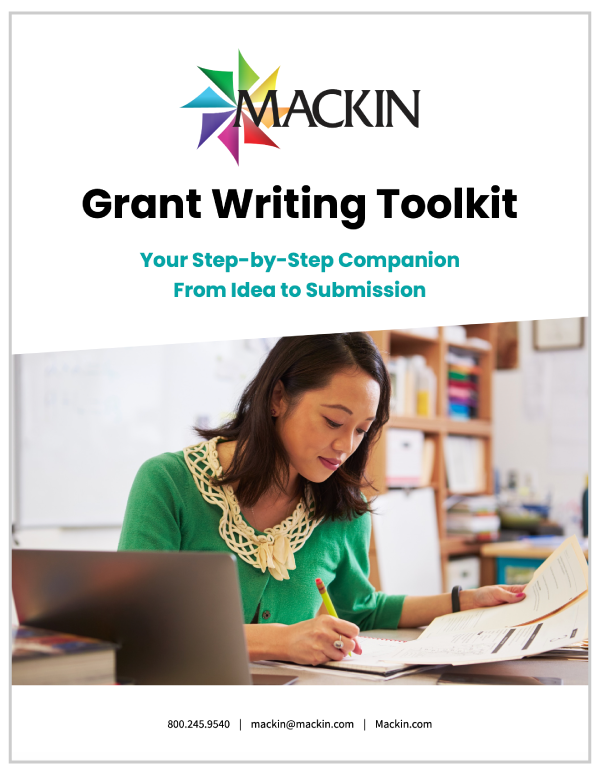

Planning a grant-funded project and seeking support?
The Mackin Grant Channel team is here to support the product side of your funding request. We can help curate product lists, build budgets, connect you with your local Mackin representative, and guide you to the grant language, toolkit resources, and funding matrix available through the Grant Channel.